

 English
 русский
 中文简体
中文简体 Español

Which Lawn Mower Blades Should I Buy?
Apr 10, 2026
When it comes to maintaining a pristine lawn, choosing the right mower blades is crucial. The blade you select can significantly impact the quality of your lawn care, as well as the performance of your mower. With so many options available, it can be overwhelming to decide which blade is suited for your needs.
Types of Mower Blades
Selecting the correct blade ensures a clean cut, lawn health, and smooth mower operation. Here’s a detailed breakdown of the common types of mower blades:
High-Lift Blades
High-lift blades are designed with a steep curve to generate strong airflow, lifting grass upright for a precise, clean cut. These blades are suited for cutting tall, dense grass and are for bagging clippings due to their powerful suction. However, they require a more powerful engine and may wear out faster in dusty or sandy environments.
- Best For: Tall grass, thick growth, bagging clippings.
- Limitations: Requires more engine power; wears out faster in dusty conditions.
Low-Lift Blades
Unlike high-lift blades, low-lift blades are designed to generate minimal airflow, reducing debris disturbance. These blades are ideal for flat, dry lawns and are for conserving mower power. They work for mowing shorter grass and are not suited for cutting tall or thick growth.
- Best For: Well-maintained lawns, dry or sandy regions, frequent mowing.
- Limitations: Less effective for tall grass or heavy bagging tasks.
Mulching Blades
Mulching blades, often referred to as “3-in-1” blades, have multiple cutting edges designed to finely chop grass clippings. These clippings are then redistributed back into the lawn, decomposing quickly and enriching the soil. While mulching blades are eco-friendly and for routine mowing, they can clog when used on wet or tall grass.
- Best For: Routine mowing, eco-friendly lawn care, enriching soil.
- Limitations: Can clog with tall or wet grass; not suitable for bagging.
Standard Blades
Standard blades are the versatile type, designed for general-purpose use. They are often referred to as “2-in-1” blades due to their ability to either side-discharge or bag clippings. These blades provide balanced cutting efficiency and are ideal for everyday lawn care.
- Best For: General-purpose mowing, side discharge, bagging clippings.
- Limitations: Not as specialized for mulching or high-lift tasks.
Gator Blades
Gator blades feature serrated edges, which excel at mulching grass clippings and directing them toward the center for further cutting. These blades are great for mulching leaves and provide bagging results. However, they can be noisy and less effective on very tall or dense grass.
- Best For: Mulching grass and leaves, mixed lawn tasks.
- Limitations: Noisy, struggles with very tall or thick growth.
How to Choose the Right Mower Blade
Choosing the right mower blade doesn’t have to be difficult. By following these guidelines, you can quickly identify the option for your needs:
OEM Number
The OEM number is essential when selecting a mower blade. This number provides the exact specifications needed for your mower, ensuring a fit. You can find this number in your mower’s manual or on the manufacturer’s website. By entering the OEM number and manufacturer details into an online search engine or store, you can easily find compatible blades.
Model Number
If the OEM number is unavailable, the mower model number is your next option. The model number is typically located on the mower deck, frame, or under the seat. Once you have it, refer to the manufacturer’s website or manual for assistance in choosing the correct blade.
Blade Length and Center Hole Design
Two key factors in selecting the correct blade are blade length and the center hole design.
- Blade Length: Measure the blade diagonally from tip to tip. A blade that is too long won’t fit properly, while one that is too short may leave patches of uncut grass.
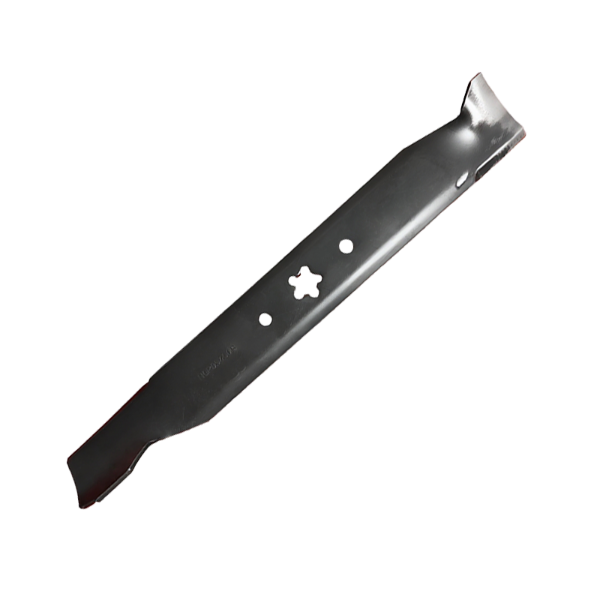
- Center Hole Design: Different mowers use various hole designs to attach the blade to the spindle. These designs include circular, rectangular, and multi-point patterns, such as star-shaped patterns with 5, 6, or 7 points. Make sure the center hole pattern matches the spindle design for secure attachment and smooth operation.
Mower Blade Maintenance and Replacement
Proper maintenance and timely replacement of mower blades are essential for the longevity of your mower and the quality of your lawn care. Neglecting your blades can uneven cuts, increased engine wear, and potential damage.
Regular Inspection
Inspect your blades regularly to look for signs of wear and damage, such as nicks, cracks, or rust. A damaged blade can cause uneven cuts and strain the engine. Check your blades after every few mowing sessions, particularly if you mow dense or tough grass frequently.
Sharpening Blades
Keeping your mower blades sharp is crucial for achieving a clean, precise cut. Dull blades can tear the grass, causing brown tips and a stressed lawn. Sharpen your blades at least once per season. You can either sharpen them yourself with a file or bench grinder or take them to a professional.
Cleaning Blades
Cleaning your mower blades after each use helps prevent grass clippings from building up and causing rust. Use a putty knife or wire brush to remove debris, and rinse the underside of the mower deck with water. Be sure to dry the blades thoroughly to prevent rust.
Replacing Blades
Even with regular care, mower blades will eventually need to be replaced. Look for these signs to determine when it’s time for a replacement:
- Significant damage that sharpening cannot fix.
- A noticeable drop in cutting performance, even after sharpening.
- Blades that are bent or warped.
Always replace blades in pairs to ensure balanced cutting, especially if your mower has a dual-blade system.
Seasonal Maintenance Schedule
Incorporate mower blade maintenance into your seasonal lawn care routine. Sharpen and inspect your blades at the start of the mowing season, perform mid-season checks, and clean or replace blades at the end of the season to ensure performance.
Comparison Table of Mower Blade Types
| Blade Type | Key Features | Best For | Limitations |
|---|---|---|---|
| High-Lift Blades | Steep curve, strong airflow for precise cutting | Tall, thick grass, bagging clippings | Requires powerful engines, wears quickly in dusty conditions |
| Low-Lift Blades | Minimal airflow, reduces debris disturbance | Flat lawns, dry/sandy regions, frequent mowing | Not effective for tall grass or heavy bagging |
| Mulching Blades | Multiple cutting edges, finely chops grass into mulch | Eco-friendly, routine mowing, soil enrichment | Clogs with tall or wet grass, not for bagging |
| Standard Blades | Balanced design for cutting and discharging clippings | General-purpose mowing, side discharge, bagging | Not specialized for mulching or high-lift tasks |
| Gator Blades | Serrated edges for enhanced mulching and bagging | Mulching leaves and grass | Noisy, struggles with tall/thick grass |
FAQ
1. How do I know which mower blade I need?
The way to identify the right mower blade is by checking the OEM number or model number of your mower. You can then search for compatible blades using these details.
2. What is the difference between high-lift and mulching blades?
High-lift blades are designed for precise cutting and bagging clippings, while mulching blades finely chop grass into mulch to enrich the soil. High-lift blades require more power and are better for tall grass.
3. How often should mower blades be replaced?
Replace your mower blades when they show significant damage, have a noticeable decrease in cutting performance, or are bent or warped. Regular inspection will help determine when replacement is necessary.
4. Are industrial-grade mower blades worth the investment?
Yes, industrial-grade mower blades are designed for heavy-duty use and durability. They are ideal for tougher mowing conditions and can handle thick grass, debris, and demanding tasks.
5. Can I sharpen my mower blades myself?
Yes, you can sharpen your mower blades at home with the right tools, such as a file or bench grinder. However, if you’re unsure, professional sharpening services are also available.
Contact Us And Get A Quote
Priority To Learn About Our New Products
 Add: North of Guo'an Road, Economic Development Zone, Guangde County, Anhui,China
Mob: +86-13967663706
E-mail: [email protected]
Add: North of Guo'an Road, Economic Development Zone, Guangde County, Anhui,China
Mob: +86-13967663706
E-mail: [email protected]
Copyright © 2025 Anhui Boxing Machinery Co., Ltd All Rights Reserved.China Custom Industrial-Grade Mower Blades Manufacturers
