

 English
 русский
 中文简体
中文简体 Español

2-in-1 vs 3-in-1 Lawn Mower Blades: Which Design Is Right for Your Mowing Needs?
Sep 24, 2026
Defining the Blade Categories
Lawn mower blades are categorized by how many functions they can perform: discharging, bagging, and mulching. A 2-in-1 blade is typically a high-lift design optimized for discharging and bagging, while a 3-in-1 blade — often called a mulching blade — adds the ability to recut clippings into fine particles and return them to the turf. The distinction is not merely functional; it lies in the geometry of the blade and the airflow it generates. High-lift blades feature a sharply angled upward curve on the trailing edge, which creates strong vertical airflow to propel clippings out the discharge chute or into the bag. Mulching blades have a more pronounced curvature with additional cutting surfaces or serrations, and they are designed to circulate clippings multiple times within the deck before dropping them as fine mulch.
Understanding these fundamental differences is essential for selecting the right blade for your mowing conditions. A 2-in-1 blade performs best when you want to collect clippings or discharge them widely, whereas a 3-in-1 blade excels when clipping recycling and nutrient return are priorities. However, the real-world performance depends on deck design, mower power, grass type, and moisture content. In this article we break down the engineering, application, and trade-offs between the two categories, allowing you to make an informed decision for your specific lawn care needs.
The Aerodynamics of Cutting: Airflow Design
The cutting performance of a mower blade is largely governed by the airflow pattern it creates beneath the deck. The blade acts as a fan, drawing air from above the deck and forcing it out the sides and rear. The shape of the blade’s trailing edge determines the velocity and direction of this airflow. High-lift blades have a steep upward curve (typically 30° to 45°), which generates a strong updraft that lifts the grass for a clean cut and then throws clippings up and out. This is effective for discharging and bagging but reduces the time clippings spend inside the deck for recutting.
Mulching blades, in contrast, have a longer, more gradual curve combined with a contoured or serrated cutting edge. The airflow is less vertical and more circular, keeping clippings suspended inside the deck longer. The recirculation zone that develops allows the blade to strike each clipping multiple times, reducing it to smaller pieces. The deck’s internal geometry (such as baffles) can enhance this effect. The trade-off is that a mulching blade produces less lift, which can lead to poor cut quality on tall or wet grass and may leave clippings visible if not finely mulched.
The following SVG illustrates the contrasting airflow patterns generated by a 2-in-1 (high-lift) blade on the left and a 3-in-1 (mulching) blade on the right. The arrows indicate the direction and relative velocity of air movement.
As the diagram shows, the high-lift blade directs clippings upward and outward rapidly, whereas the mulching blade keeps them in a rotational pattern. This difference directly impacts the effectiveness of each blade for different mowing tasks.
Performance Breakdown: Discharge, Bagging, and Mulching
The following table provides a side-by-side comparison of how 2-in-1 and 3-in-1 blades perform in each of the three main functions. Ratings are based on typical results under moderate conditions (healthy turf, dry grass).
| Function | 2-in-1 (High-Lift) | 3-in-1 (Mulching) |
|---|---|---|
| Discharging | Excellent – wide throw, long distance | Fair – shorter throw, risk of clumping |
| Bagging | Good – strong airflow fills bag efficiently | Poor – fine clippings may not reach bag |
| Mulching | Poor – clippings not recut enough | Excellent – fine clippings, good nutrient return |
| Cut quality on tall grass | Good – lift prevents missed strands | Fair – may leave rough cut if not sharp |
| Power draw | Lower – less resistance | Higher – additional cutting surfaces |
It is important to note that these are general tendencies. Deck design and blade sharpness can shift the balance. For instance, a mulching blade with very sharp serrations can approach the discharge performance of a standard high-lift blade in certain decks. The key takeaway is that neither blade type is universally superior; the optimal choice depends on the desired outcome.
When 2-in-1 Blades Excel
High-lift blades are the preferred choice in the following scenarios:
Frequent bagging – If you collect clippings for disposal or composting, the strong airflow ensures the bag fills efficiently without clogging. This is especially valuable in seasons when grass grows quickly and leaving clippings would smother the turf.
Wet or tall grass – The upward lift helps prevent the blade from bogging down in heavy matted clippings, reducing the risk of scalping and leaving a cleaner cut.
Large lawns with easy access to discharge – When you can allow clippings to be widely dispersed, the high-velocity throw of a 2-in-1 blade covers more area, reducing the need for raking.
Commercial mowing at high speeds – Many zero-turn mowers use high-lift blades to maintain productivity; the lower power draw relative to mulching blades allows faster ground speed.
If you operate a deck that is 42 inches or larger and primarily use bagging or side discharge, a high-lift design will yield the best results. Consider a blade with a lift angle of 35° or more for maximum performance. An example of such a component is a replacement high-lift blade engineered for decks in the 42–54 inch range.
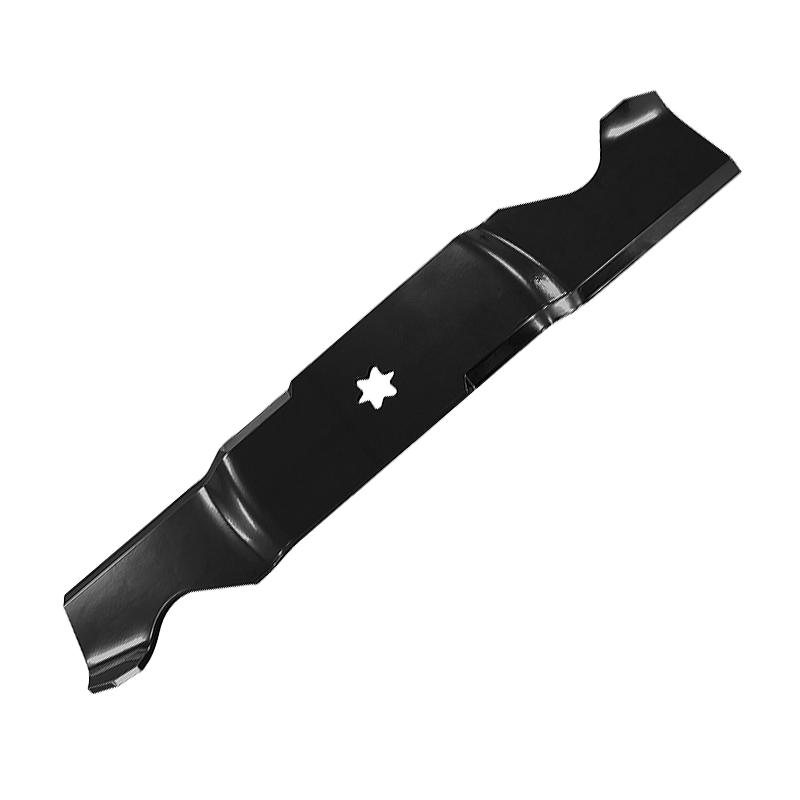 742-04053 MTD/Cub Cadet High-Lift Replacement Blade for 42–54 Inch DecksDesigned for bagging or side discharge, this high-lift blade enhances grass clipping performance on decks from 42 to 54 inches. Proper alignment of the discharge chute and periodic inspection of the lift wing are essential to maintain efficiency and prevent blockages.View Product →
When using high-lift blades, note that the cutting deck must have a properly aligned discharge chute; otherwise clippings may accumulate in the channel. Regular inspection of the blade lift wing is recommended, as a bent or dull wing reduces lift significantly.
When 3-in-1 Blades Are the Better Choice
Mulching blades shine in situations that prioritize nutrient return and aesthetics over collection:
Regular mulching for lawn health – Returning fine clippings returns nitrogen and organic matter to the soil, reducing fertilizer needs by up to 25% according to turfgrass studies. This is a cornerstone of sustainable lawn care.
Dry, moderate grass growth – Mulching works best when you cut less than one-third of the grass blade length at a time. Under these conditions the blade can recut clippings into nearly invisible fragments.
Low-lift deck compatibility – Some mowers are designed specifically with mulching decks that have internal baffles. Using a 3-in-1 blade in such a deck maximizes the recirculation effect.
Noise and environmental concerns – Because mulching eliminates the need for bagging and disposal, it reduces yard waste volume and avoids sending clippings to landfills.
For lawns under 5,000 square feet where bagging is infrequent, a mulching blade is often the most convenient choice. Look for blades with multiple cutting edges or notched designs that increase the number of cuts per rotation. A typical 3-in-1 replacement blade suitable for many residential mowers is shown below.
Be aware that mulching blades require sharper edges to work effectively. Dull mulching blades not only fail to chop clippings but also increase power consumption. A good practice is to sharpen mulching blades after every 8–10 hours of operation.
Selecting by Mowing Conditions and Grass Type
The decision between 2-in-1 and 3-in-1 is not always binary; some operators use both blades during different seasons. The following table provides a quick reference based on grass type and common mowing routines.
| Condition | Recommended Blade | Reason |
|---|---|---|
| Spring / rapid growth | 2-in-1 (high-lift) | Manages tall, dense clippings; prevents clumping |
| Summer / moderate growth | 3-in-1 (mulching) | Recycles nutrients; fine particle left on lawn |
| Fall / leaf coverage | 3-in-1 (mulching) or specialized leaf blade | Shreds leaves into small fragments |
| Drought / dry grass | 3-in-1 (mulching) | Better cut without lifting dust; less power draw |
| Commercial / high speed | 2-in-1 (high-lift) | Faster ground speed; less bogging down |
| Fine fescue / low-cut lawns | 3-in-1 (mulching) with sharp edge | Clean cut at low height; minimal residue |
For those who want a compromise, some blade sets are sold as “multipurpose” with a lift angle between standard high-lift and pure mulching. However, these often achieve neither function as well as dedicated designs. Data from controlled tests indicates that dedicated 2-in-1 blades can provide up to 30% better bagging fill than multipurpose designs, while dedicated 3-in-1 blades achieve 20% finer mulching particles.
A practical approach is to keep a set of each blade type and swap them when season or mowing needs change. This requires only a wrench and about 15 minutes per mower. Using a torque wrench to tighten the blade bolt to the manufacturer’s specification (typically 40–60 ft·lb) is critical for safety and vibration control.
Frequently Asked Questions
Q1: Can I use a 3-in-1 blade for bagging?
A1: Yes, but performance will be poor compared to a 2-in-1 blade. The reduced lift may not fill the bag completely, and fine clippings can escape through the chute. If you bag occasionally, a 3-in-1 blade might still work, but expect slower bagging and more frequent stops to empty a partially full bag.
Q2: Are 2-in-1 blades the same as standard blades?
A2: In most contexts, yes. Standard or “OEM” replacement blades are often high-lift designs. Some manufacturers offer a “low-lift” blade for special purposes, but the term 2-in-1 almost always refers to high-lift geometry.
Q3: How often should I sharpen 2-in-1 vs. 3-in-1 blades?
A3: All mower blades require sharpening after every 10–15 hours of use. Mulching blades may need slightly more frequent sharpening because they have additional cutting surfaces that dull faster. A dull mulching blade will produce long, visible clippings instead of fine mulch.
Q4: Does deck size affect the choice between 2-in-1 and 3-in-1?
A4: Yes. Larger decks (54 inches or more) often benefit from high-lift blades because they need strong airflow to push clippings across the wide chute. Smaller decks (under 42 inches) can be more effective with mulching blades since the recirculation zone is easier to maintain.
Q5: Can I mix 2-in-1 and 3-in-1 blades on the same spindle?
A5: Not recommended. Mixing blade types creates unbalanced airflow and can cause vibration, poor cut quality, and premature bearing wear. Always use a matched set of the same blade type on all spindles.
Q6: Do 3-in-1 blades consume more fuel or battery power?
A6: In general, yes. The additional cutting edges and longer recirculation create more drag, which can increase fuel consumption by 5–10% or reduce runtime on battery mowers by a similar margin. The actual difference depends on the specific blade design and the deck aerodynamics.
Q7: Will a 2-in-1 blade damage the lawn by removing too many clippings?
A7: When used with bagging, it removes clippings entirely, which can deprive the soil of organic matter. However, if you discharge instead of bag, the clippings are distributed and still return some nutrients. The main concern is that long clippings left on the surface can block light and harbor disease. Bagging with high-lift blades eliminates that risk.
Q8: Is there a blade that combines the best of both?
A8: Some manufacturers offer hybrid designs with adjustable lift or replaceable mulching segments, but these are complex and often not as durable as dedicated blades. For most users, maintaining two sets of blades is the most effective and cost-efficient solution.
Contact Us And Get A Quote
Priority To Learn About Our New Products
 Add: North of Guo'an Road, Economic Development Zone, Guangde County, Anhui,China
Mob: +86-13967663706
E-mail: [email protected]
Add: North of Guo'an Road, Economic Development Zone, Guangde County, Anhui,China
Mob: +86-13967663706
E-mail: [email protected]
Copyright © 2025 Anhui Boxing Machinery Co., Ltd All Rights Reserved.China Custom Industrial-Grade Mower Blades Manufacturers
