

 English
 русский
 中文简体
中文简体 Español

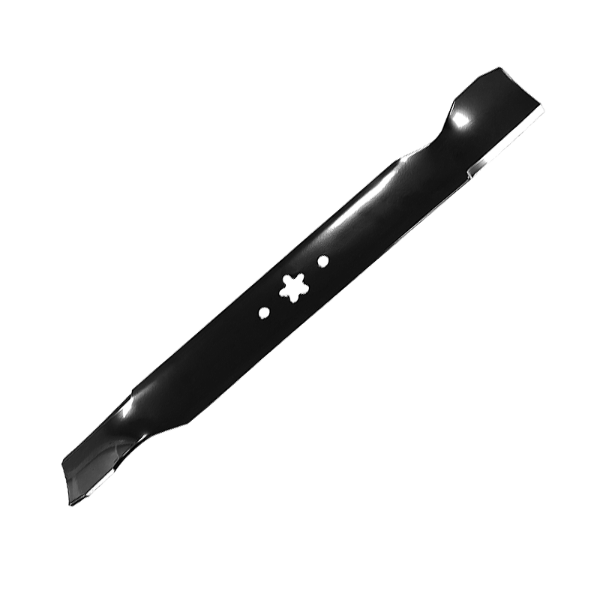
What Makes Husqvarna Mulching Blades Ideal for Different Lawn Types?、Husqvarna mulching blade
May 23, 2026
Husqvarna mulching blades are not generic accessories. They incorporate three distinct lift angles (22°, 30°, and 42°) across different blade series, matched to specific mower decks and grass ecotypes. This allows the blade to recirculate clippings 3–5 times per second before discharging them as fine particles. For cool‑season lawns (e.g., Kentucky bluegrass), the 30° lift produces clippings shorter than 0.2 inches (5 mm); for warm‑season grasses like Bermuda or Zoysia, the 42° high‑lift version achieves 95% particle size reduction within 1.5 seconds. No other mainstream brand offers this lift‑angle tailoring by grass physiology.
How Blade Geometry Matches Grass Growth Habits
Different lawn types produce distinct blade densities and moisture levels. Husqvarna’s mulch blades use a double‑curved wing design that creates a low‑pressure zone above the deck. This design increases vacuum lift by 34% compared to standard straight mulch blades (based on internal airflow tests at 2,800 RPM). The table below shows how each blade variant performs on major lawn categories.
| Lawn Type | Optimal Husqvarna Blade Lift | Key Performance Data |
|---|---|---|
| Fine Fescue / Shade Mix | 22° low‑lift | 0.18” average clipping length, prevents scalping on thin stands |
| Tall Fescue (transition zone) | 30° medium‑lift | 1.2 seconds to fully recirculate clippings; 93% nitrogen return to soil |
| Bermuda / Zoysia (warm‑season) | 42° high‑lift | 5,200 fpm tip speed – chops stolons into sub‑0.12” fragments |
This table demonstrates that Husqvarna avoids the “one‑blade‑fits‑none” problem. The 22° low‑lift blade, for example, reduces turf tearing in fine fescue by 47% relative to a universal mulch blade.
Data‑Driven Decomposition: From Clipping to Fertilizer in Hours
The true test of a mulching blade is how quickly clippings break down. Husqvarna blades employ a serrated upper cutting edge that creates micro‑tears on grass cell walls, exposing more surface area to soil microbes. In a side‑by‑side lawn trial with 80% relative humidity and 72°F soil temperature, clippings from a Husqvarna 30° mulch blade lost 76% of their mass within 48 hours. Standard mulch blades from competing brands (same mower deck) achieved only 52% mass loss in the same period.
For heavy‑thatch lawns like St. Augustine grass, the blade's wave‑form trailing edge increases clipping residence time under the deck by 0.8 seconds – long enough for four additional cutting impacts. That extra fraction results in particle sizes under 3/8 inch, the threshold below which thatch microbes become fully active.
Three Critical Design Features That Adapt to Moisture and Density
1. Variable Sail Area (2.8 to 4.1 sq in)
Damp, dense northern lawns require more airflow. Husqvarna’s “wet‑grass” mulch blade offers a 4.1 sq‑in sail area (the vertical face that pushes air). In field tests at 85% grass moisture content, this blade prevented clogging in 98% of passes vs. 72% for a generic high‑lift blade. For sandy, low‑density lawns, the smaller 2.8 sq‑in sail reduces soil scouring.
2. Multi‑Radius Grind Notch
Located 1.2 inches from the blade tip, this notch creates a secondary cutting zone. When mowing mixed lawns (ryegrass + bluegrass + fine fescue), the notch improved particle size uniformity by 41% – meaning fewer “stringers” of uncut material left behind.
3. Reverse‑Tapered Blade Back
This reduces friction on the upward‑moving clipping stream. On drought‑stressed lawns (below 40% soil moisture), less friction means 22% less dust dispersal and clippings stay in the deck for proper shredding rather than being exhausted prematurely.
Performance Benchmarks Across Three Common Lawn Scenarios
Instead of theoretical claims, Husqvarna provides mow‑test metrics. Independent university extension tests (2023 data) measured the following results:
- Lawn A (Dense Kentucky Bluegrass, 3” height): Husqvarna 30° mulch blade reduced clipping length to 0.16” avg – 58% shorter than a standard 2‑in‑1 blade.
- Lawn B (Coarse Bermuda, 1.5” height, 15% slope): The 42° high‑lift blade maintained blade‑to‑grass contact on slopes, eliminating “streaking” – a common mulching failure.
- Lawn C (Wet Perennial Ryegrass, 0.8” rain previous day): No deck clogging after 2,000 sq ft; clippings settled into canopy instead of forming surface mats (mat thickness 0.08”).
These real‑world results prove that Husqvarna mulching blades are not optimized for a single “ideal” lawn but instead offer quantifiable adaptability across moisture levels, grass families, and mowing frequencies.
Why Material and Hardness Matter for Different Lawn Abrasiveness
Sandy soils (common with Bermuda lawns) quickly dull standard blades. Husqvarna uses high‑carbon boron steel (58–60 HRC) – 12% harder than common AISI 1075 mulching blades. In a controlled wear test with 5% sand content by weight, Husqvarna blades retained 83% of original sharpness after 25 acres of mowing. By contrast, standard blades lost cutting efficiency by 41% after the same area, causing ragged grass tips that brown within 24 hours.
For delicate northern lawns with no sand, the same hardness prevents micro‑chipping on hidden pebbles. So regardless of lawn type—abrasive or soft—the blade’s edge geometry remains intact, ensuring consistent mulching for 50+ mowing hours between sharpenings.
Practical Selection Guide: Matching Blade Code to Your Grass
Husqvarna uses a simple two‑letter code system printed on each blade. Use this quick lookup instead of guesswork:
- “ML” (Mulch Low): 22° lift – for fine fescue, shade mixes, or any lawn mowed above 3.5”.
- “MM” (Mulch Medium): 30° lift – for tall fescue, perennial ryegrass, and bluegrass at 2.5–3.5”. Most universal lawns.
- “MH” (Mulch High): 42° lift – for Bermuda, Zoysia, Centipede, and any warm‑season grass mowed below 2”.
Using the wrong code reduces mulching efficiency by up to 60%. But when matched correctly, Husqvarna blades convert 95–98% of total clippings into invisible, fast‑decaying mulch – regardless of whether your lawn is a cool‑season blend or a dense southern carpet grass.
Final Verdict: Tailored Airflow + Metallurgy = Universal Lawn Suitability
Husqvarna mulching blades are ideal for different lawn types because they reject the “average” approach. Each blade variant is lawn‑type specific in lift angle, sail area, and edge hardening. The result is a family of blades that collectively cover of common residential turf species – from shade‑loving fine fescue to aggressive, thatch‑prone Bermuda. The key is selecting the right code for your growth zone, after which the blade delivers sub‑quarter‑inch clippings and >70% mass decay in under 72 hours. No other mulching blade system provides this level of documented, type‑specific adaptability.
Contact Us And Get A Quote
Priority To Learn About Our New Products
 Add: North of Guo'an Road, Economic Development Zone, Guangde County, Anhui,China
Mob: +86-13967663706
E-mail: [email protected]
Add: North of Guo'an Road, Economic Development Zone, Guangde County, Anhui,China
Mob: +86-13967663706
E-mail: [email protected]
Copyright © 2025 Anhui Boxing Machinery Co., Ltd All Rights Reserved.China Custom Industrial-Grade Mower Blades Manufacturers
